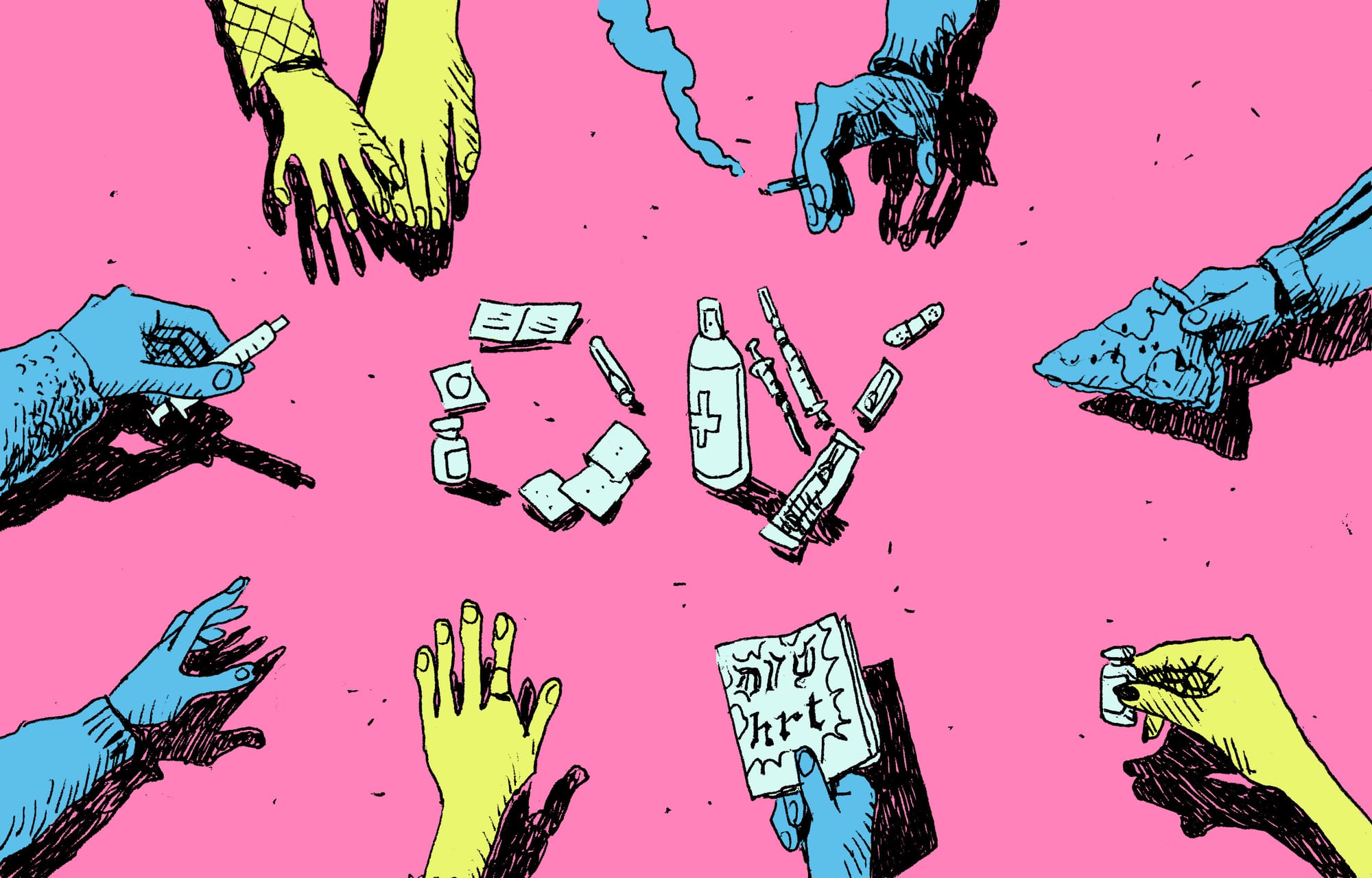
She presses a needle into the side of her thigh and feels a small sting of relief—not only because she enjoys that little pain but because, in that moment, she feels in control. The gesture is simple and repetitive: alcohol swab, deep breath, slow pressure, soft burn. Every week, she sits on the edge of the bed, right leg bare, the city’s early morning noise filtering through the half-closed shutters as she draws the plunger back and watches the pale liquid rise. Then she presses the needle into the side of her thigh, a sharp sting, a pulse, a breath held—then released in a slow exhale as the liquid flows through her muscles into her bloodstream. This ritual is not a performance or a provocation. Not romantic, nor tragic. It is simply life. Just a transfemme dyke in Dr. Martens boots and long blond hair beneath a hoodie, practicing Do-It-Yourself hormone replacement therapy (DIY HRT) for over a year, injecting estrogen to turn her bloodstream into something even more femme.*
* The people and events in this text are fictitious. Any similarity to actual people or events is purely coincidental.
DIY HRT often takes shape in underground constellations of group chats, zines, whispered guidance, and shared survival skills that keep hormones circulating even when they’re legally questionable or forbidden. DIY HRT practices exist in the shadows and yet sustain entire communities, as people learn from friends who learned from others, and networks stretch across Europe to fill the gaps left by clinics and states that police us more readily than they support us. Navigating a system where bureaucracy and stigma make access fragile, DIY HRT becomes a necessary infrastructure: a patchwork of knowledge and mutual aid where dosages, sourcing, and distribution bend around the rigid limits of institutional care. Writing about and from within this act of defiance means tracing intimate and political gestures without exposing the people behind them, making visible a form of care built on harm reduction, shared autonomy, and the stubborn creativity through which trans communities have always kept one another alive. I speak specifically from and about a transfemme experience because that is also my own location in this struggle, and because feminization remains one of the most scrutinized and pathologized forms of transition: the desire to feminize one’s body is still treated with suspicion, moral panic, and medical restraint, shaped by transmisogyny and the long history of disciplining femininity itself.
Navigating a hostile maze
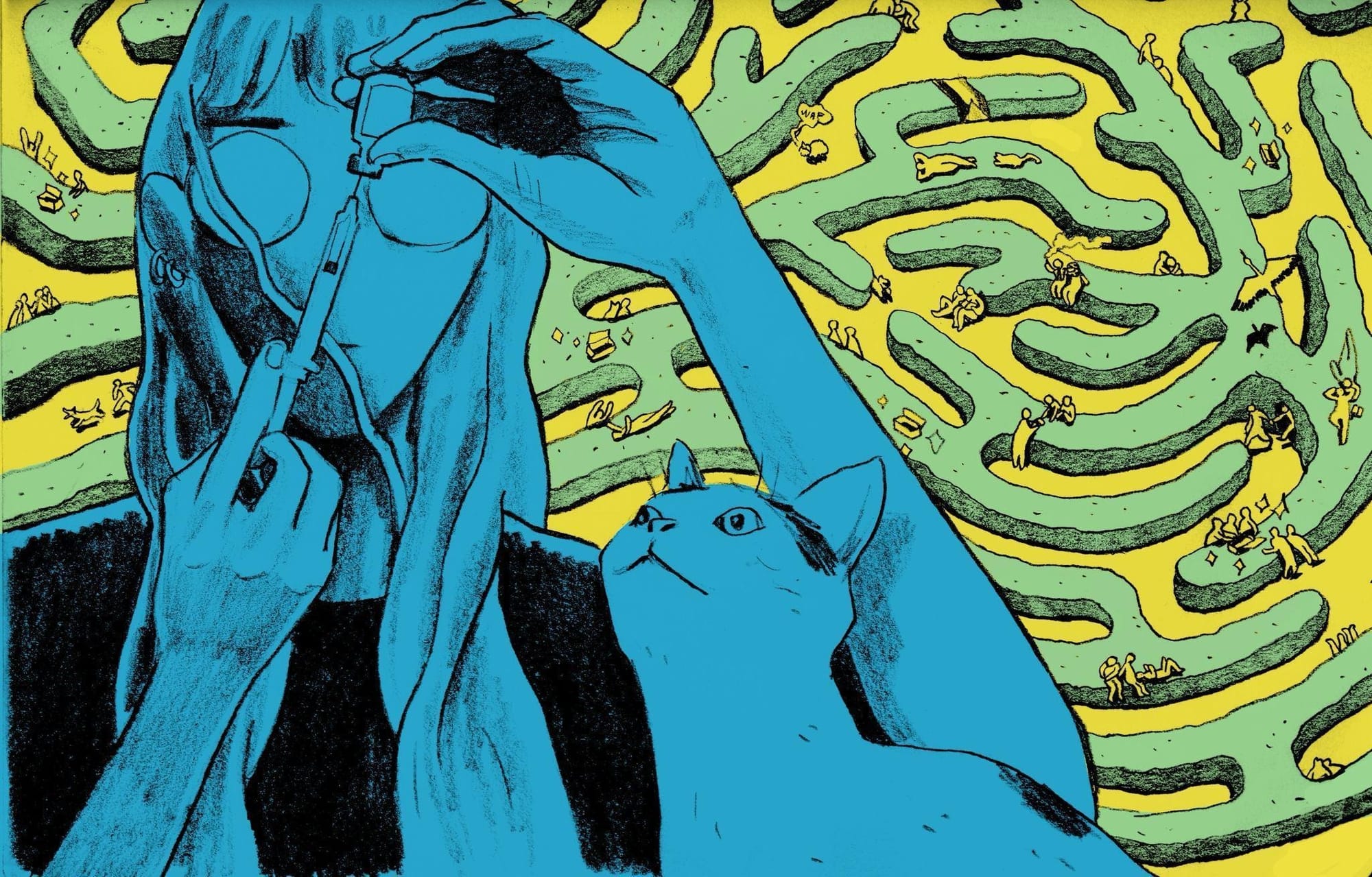
DIY HRT in Italy grows out of a medical system that is exclusionary, inefficient, pathologizing, and often openly hostile. It is a response to institutionalized transphobia, as well as an active rejection of clinical authoritarianism and a demand to practice medicine autonomously. For many trans people, the public health pathway for hormone access is a maze of protocols, psychological evaluations, and endless bureaucracy. To start hormone therapy, one must first obtain a diagnosis of “gender dysphoria” or “gender incongruence,” a report from a psychologist that authorizes the endocrinologist to prescribe treatment. Only then can you access hormones through the Servizio Sanitario Nazionale (National Health Service, SSN)—and even then, options are limited. Waiting lists stretch for months, sometimes over a year, and every step is a reminder that gender is something that must be certified by others. This is a process built on the persistent assumption that trans bodies are medical problems to be diagnosed and managed, denying the very principle of gender self-determination. DIY HRT reclaims that principle by practicing care autonomously.
Hormones for transfeminine people are available in multiple forms, such as pills, patches, gels, or injections, and the choice between them should reflect individual needs, health considerations, personal goals, and how someone wants to live with their body. A genuinely affirming system would recognize this diversity, adapting treatment to the person rather than forcing them to conform to pre-established protocols. Instead, once inside the system, what is offered is narrow, outdated, and rooted in cisnormative assumptions about what a “safe” or “proper” transition should look like. In Italy, endocrinologists favor transdermal gels (such as Sandrena or Estreva) or patches, which are both marketed for menopausal cis women and absorbed through the skin. Injectable estrogens—like estradiol valerate or enanthate—are rarely prescribed to trans women through official medical channels. The former options are perceived as “safer” by doctors because they allow for lower and more easily controlled estrogen levels. But this medical caution often translates into underdosing, leaving many transfemmes in a constant state of hormonal deprivation: tired, dysphoric, and disconnected from their bodies.
She started like this, applying that gel every morning, with its cold, sticky texture and faint pharmaceutical smell, on clean skin.
Most of the time, endocrinologists also prescribe antiandrogens, like cyproterone acetate (Androcur), used to suppress testosterone, which often come with significant side effects: fatigue, depression, libido loss, and liver strain. These very substances meant to affirm trans identities can, paradoxically, dull the life within one’s body. By contrast, injectable estrogens provide a more embodied and immediate sense of agency: they act more steadily and predictably in the bloodstream, enabling many transfemme people to avoid the hormonal rollercoaster of transdermal gels. DIY takes root in the administrative and legal cracks, as well as psychological, emotional, and somatic ones, carved into the space between what trans people need and what they are allowed to have.
Meanwhile, the Italian state is actively intervening in medical transitions, turning seemingly bureaucratic adjustments into tactics of restriction, erasure, and deterrence. In 2024, the Agenzia Italiana del Farmaco (Italian Medicines Agency, AIFA) reclassified Sandrena, a widely used estradiol gel, from Class A (covered by the SSN) to Class C, meaning it must now be paid out-of-pocket unless prescribed under a very specific therapeutic plan. A minor administrative change on paper that forced many to interrupt or slow down their transitions. That same year, the Ministry of Health ordered an inspection of Careggi Hospital in Florence—one of the few public clinics serving trans minors—placing its use of puberty blockers under scrutiny, stalling services, and essentially turning a rare space of care into an object of suspicion. Soon after, the Ministry established a so-called “technical panel on gender dysphoria” composed entirely of cisgender people presented as “experts” and excluding every trans-led organization. Ostensibly scientific, the panel functions instead as a political instrument that reasserts pathologization and gatekeeping, framing trans lives as conditions to be managed and corrected.
These actions echo a broader international political project in which right-wing movements weaponize a fabricated notion of “gender ideology” to delegitimize trans struggles and to roll back hard-won civil rights. Framed as a defense of “nature,” the family, and the nation, this discourse casts gender and sexual diversity as civilizational threats. Trans bodies, in particular, are turned into political targets, mobilized to produce moral panic, justify state control over education and healthcare, and consolidate authoritarian power. Across contexts, the message is the same: trans life must be policed, contained, and made administratively unlivable.
A technology of care and bodily autonomy
There is nothing transcendent about DIY HRT. It is practical, procedural, and sometimes boring. It is hers. Injecting estrogen into her thigh is more than a biochemical action. The small sting, the pressure of the needle sliding through muscles, the slow push of liquid under the skin—these sensations anchor her back into her own flesh. Injections reintroduce tactility and intention into the act of transition, and with them the ability to listen to her body and act on it without waiting for institutional permission.
DIY HRT happens in kitchens, bedrooms, bathrooms, and shared flats across Italy and beyond. In that very domestic moment of self-determination, this act becomes a personal and political technology of care, a tool of survival in a world that refuses to see trans people as worth saving. Autonomy looks like the quiet repetition of an everyday gesture.
In bypassing doctors’ permission and medical supervision, DIY HRT enacts bodily autonomy as the refusal of a whole political order that makes bodies legible only when they pass through the institutional gaze. It is a political condition sustained through community, care, and the refusal of pathologization. Bodies do not exist to comply with the state’s vision of what health should be. They need to be lived, felt, and shaped according to one’s desires. To speak of bodily autonomy in the context of DIY HRT is to stretch the concept beyond the liberal ideal of “individual sovereignty,” which assumes a self who acts freely and independently. In fact, the “self-administered” is almost misleading, because it is rarely a solitary act, as it is something learned, shared, whispered about, and collectively refined. For trans people, autonomy is a negotiation with vulnerability, precarity, and interdependence. In Trans Femme Futures (2024), poet and theorist Nat Raha and philosopher Mijke van der Drift argue for a broader reorganization of how care itself is imagined: as a shared, collective, and material practice of survival, autonomy, and joy. It is precisely within this reimagined ethics of care that DIY HRT finds its grounding as a transfeminist technology of survival that doesn’t emerge from theory. Conversely, it comes from the lived, precarious realities of communities and from the pragmatic, ingenious infrastructures they build.
“DIY HRT fills the gaps of a system that was never meant to include trans people.”
Worsening material conditions—job precarity, austerity, institutional transphobia—have certainly pushed many towards it. Trans people turn to DIY because they are excluded from the system; others because the system refuses to see them as capable of understanding and managing their own bodies. DIY HRT is shaped by class, access, race, migration status, and community connection and can take many forms: sourcing hormones through informal networks, blending formal check-ups with self-directed regimens, or sharing information to interpret lab results. Even among these, privilege matters. For many migrant or racialized trans people, the risks of being identified, deported, or criminalized make even accessing basic medical care a source of danger, an act of resistance, or simply impossible. The very same gestures—injecting hormones, exchanging a vial—can mean empowerment for one person, while criminal exposure for another. This inequality runs through the veins of trans communities. It is what makes mutual aid both necessary and fragile: DIY HRT fills the gaps of a system that was never meant to include trans people, while reproducing its hierarchies in subtle ways. These practices are therefore about autonomy and about navigating privilege, precarity, and access in a world where survival is unevenly distributed. To care for one another is to face this unevenness, to know that solidarity is both an act of love and a negotiation with the system that divides humans into strict and oppressive categories.
A circulating knowledge
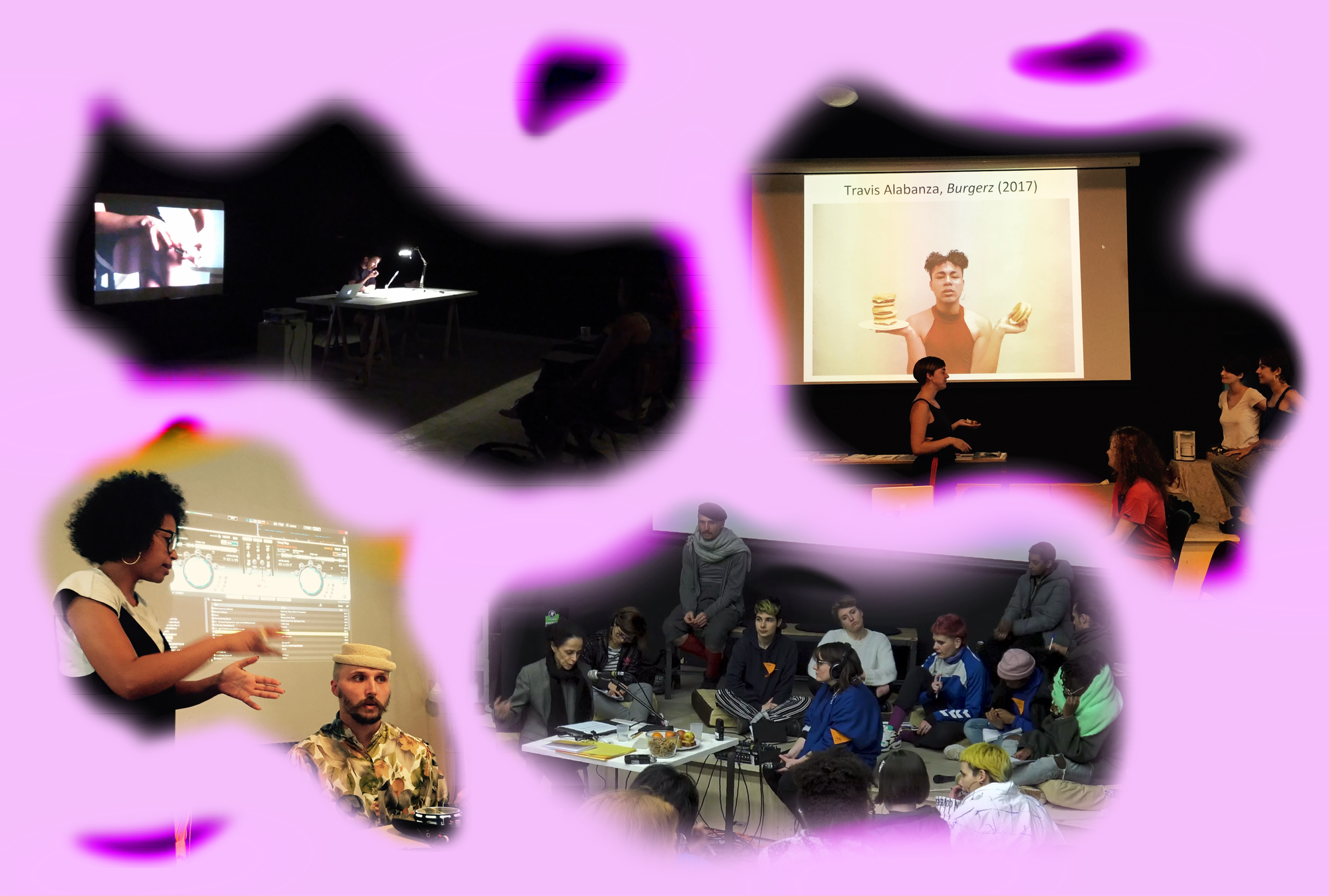
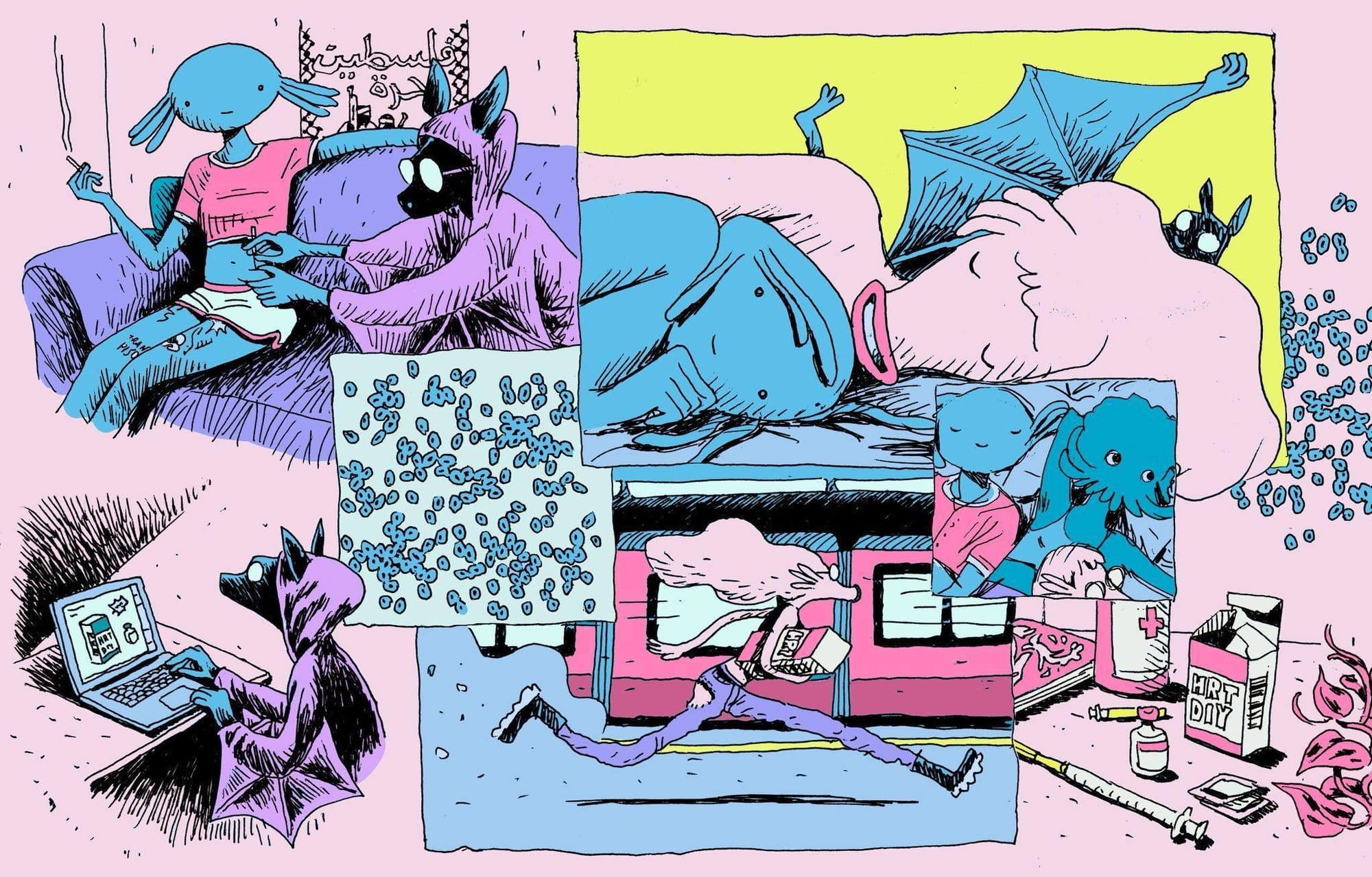
Her first injection was given by F. in her bedroom. F. guided her through it with calm precision, showing her how to plunge the needle into her own body, and cracking jokes through the tension. She laid on her belly on F.’s bed, trousers around her knees, butt up in the air, feeling ridiculous and nervous in equal measure. She felt the warmth of the sting as F. injected her. After a few seconds, it was done. They laughed and hugged each other in a messy, smoky bedroom filled with nervousness and mutual trust. This is what transfemme care looks like. A kind of intimacy that is neither romantic nor strictly medical. After that, she took over. She learned her dose, memorized the feel of the muscle, the way the syringe should enter smoothly, decisively. She moved to the outer thigh—easier for solo injections—thanks to another transfemme person, A., who showed her the spot at an afterparty in Berlin. She passed that knowledge on to other sisters and friends, showing them how to do it through video calls, meetings, and workshops.
In trans communities, self-determination is sustained through the production and circulation of knowledge. Collective autonomy passes from body to body like a virus. Knowledge that smells faintly of alcohol swabs and disinfectant. Knowledge from inside the communities that travels through desire, through trust, through care. It is a way to learn how to avoid the hormonal rollercoasters, the flatlined libido, the one-size-fits-all protocols that clinicians insist on repeating even when they are harmful. DIY HRT knowledge is far from improvised; it’s built through years of comparing notes, reading studies, sharing side effects, and paying attention to what actually works. Injectable estrogens, doses, and techniques move through networks of friends, lovers, ex-lovers, transfemmes in group chats, and many other people who research, source, and redistribute.
“What is radical today is that DIY HRT happens against the isolating machinery of capitalism, where even care has been privatized, medicalized, and monetized.”
Mutual aid is what happens when survival becomes a shared project. As lawyer and transgender activist Dean Spade defines it, mutual aid is a “collective coordination to meet each other’s needs, usually from an awareness that the systems we have in place are not going to meet them.” It is the redistribution of resources, knowledge, and care outside hierarchical systems of control. It is the collective response that emerges when the state withdraws from its responsibility to sustain life. It is the labor of recognition and support, the concrete practices through which trans communities sustain each other. Spade reminds us that mutual aid is one of the oldest forms of human cooperation, older than capitalism, older than the state. What is radical today is that DIY HRT happens against the isolating machinery of capitalism, where even care has been privatized, medicalized, and monetized.
When she rushes toward the red line metro in Milan—cut-off jeans, crop top, half tits out—heading to the hospital to pick up boxes of estradiol gel for friends who cannot afford them, she is participating in a rhythm of care that transforms mundane errands into acts of survival. Standing in line under cold neon lights, she glimpses other transfemmes and exchanges a complicit look: what the hell are we doing here? The absurdity of bureaucracy is punctuated by tenderness. This too is mutual aid: deeply transfemme love, enacted through labor, trust, and shared vulnerability.
Hil Malatino, a scholar and activist focused on trans studies and disability justice, writes that care takes shape through practice, through labor, and through action. He also argues that trans care is not limited to domestic or institutional settings. It shows up in the streets, clubs, bars, movements, informal groups, and community centers—places where care must be invented and sustained. Mutual aid is a response to structural precarity and a practice that builds the conditions for collective liberation.
A softly humming defiance
Mainstream definitions of harm reduction usually point to state or institutional policies, programs, and practices aimed at mitigating the negative consequences of psychoactive substance use, without necessarily limiting consumption. Yet, as the scholar and advocate Shira Hassan emphasizes, harm reduction goes beyond a set of strategies; it is a liberatory ethic rooted in radical self-determination that recognizes embodied experience, daily life practices, and grassroots knowledge as not secondary to formal authority but vital forms of expertise.
As she began using injectable hormones and joining DIY communities, she found herself stepping into just that. What began as a survival mechanism became a care framework passed from needle to needle; a way of already enacting another world, even under the weight of a system designed to control and erase trans people.
Harm reduction traces back to the work of BIPOC trans sex workers in the 1960s and 1970s. As activist and visual artist Tourmaline writes, people like Marsha P. Johnson, Sylvia Rivera—Black and Latina trans activists central to the Stonewall uprising in New York City in 1969—and their comrades built networks to protect themselves and their communities under constant threat. They created practices that preserved life, fostered dignity, and cultivated mutual aid, all in a world that considered them disposable. Contemporary trans communities inherit this legacy: harm reduction is political, relational, and embodied. La Liga de Salud Trans in Colombia expands this understanding further. They created a collective, autonomous trans-led organization focused on harm reduction, as a structured ecosystem rather than a technique. Their work shows that reducing harm involves minimizing medical risk while also building the social, emotional, and political conditions that make trans life possible in the first place. It is precisely this lineage that frames DIY HRT as a form of harm reduction.
Harm reduction thrives in alternative mutualistic hormone distribution networks and peer-to-peer forms of support that address institutional shortcomings. However, it cannot become an ideology. Staying within the medical system, when possible, remains a valid survival strategy. The point is to reclaim it as a space for self-determination, guided by consent rather than hierarchy and fear. Transitioning under capitalism is already an act of defiance. And while DIY HRT is often uncertain and uneven, it offers a way to care for each other with the tools at hand, to make daily lives a playground for autonomy, resistance, and solidarity. It is an ethics, a practice, and a community.
There’s no time to wait. She knows that no one is coming to save her—yet she believes in collective liberation through the flesh. It is a softly humming defiance that transforms her. And in that act of mutual care, of circulating knowledge, of trusting bodies and each other, she glimpses what liberation could look like: messy, imperfect, and deeply, insistently human.
Sandra Cane (she/they) is a writer and independent researcher based in Italy. Her work reflects on the material connections between body and writing and on queer, anti-normative, and decolonial cultural practices. She writes for magazines and digital platforms such as Arabpop, Flash Art, Kohl: a Journal for Body and Gender Research, Il Tascabile, Lucy. Sulla cultura, Not – NERO on Theory, Palestine Square, and has written for Collana Altera and Tamu-Tangerine Edizioni. She published Grammatica della frammentazione (Einaudi, 2023) and Trans. Una poetica del paradosso per la collanna (Nero Editions, 2026). She collaborates on performance projects, publications, and talks with collectives, independent spaces, and institutions. She is a member of Bagnomaria, a trans-collective space in Milan.
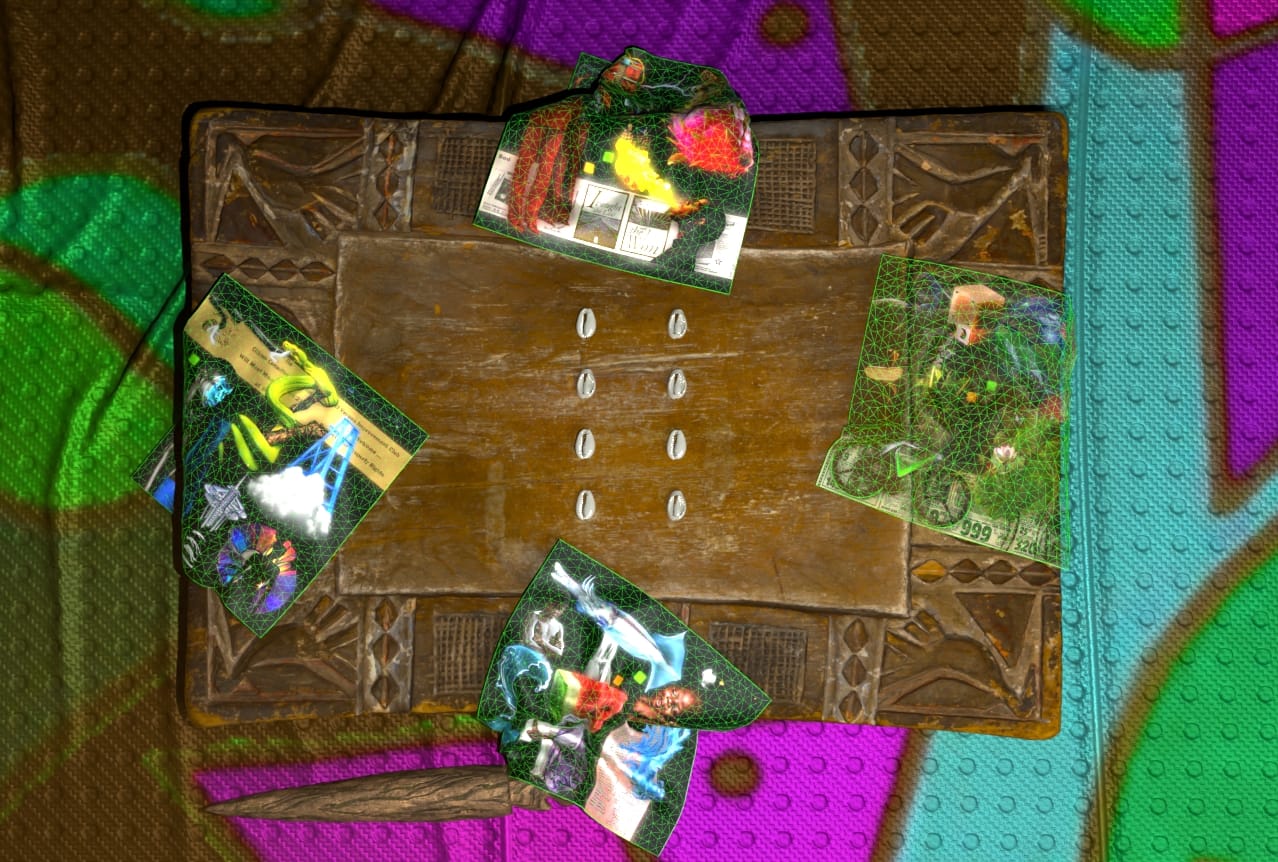
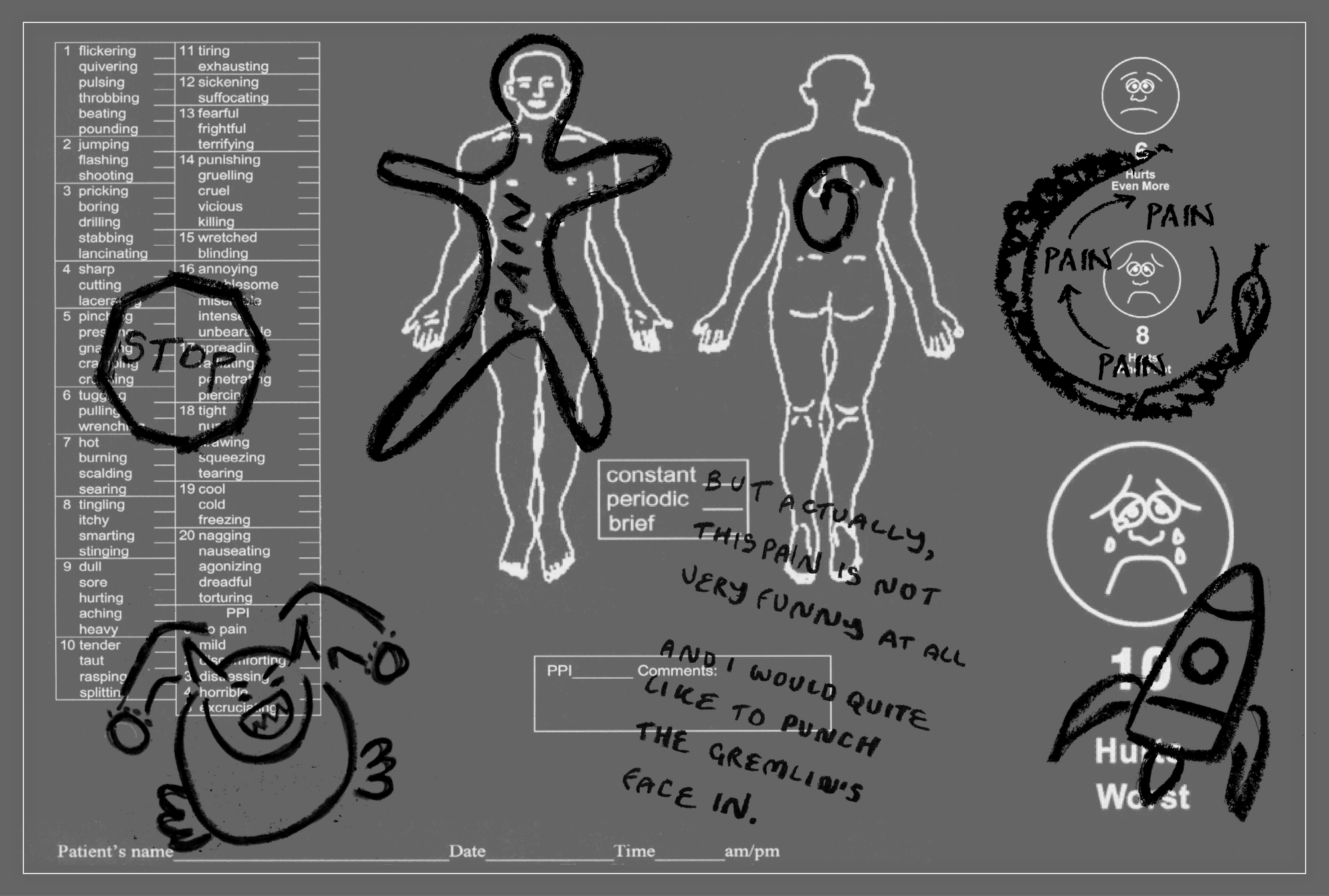
Illustrations by Dari Gatti, an illustrator and comic book author based in Brussels, Belgium, who likes drawing and imagining stories because he feels that sometimes a little magic can happen there.
Video by Felinho (they/them), a trans artist who loves exploring intimate moments of (self)pleasure, capturing the enchantment of trans bodies in front and behind the camera. They strongly believe in the power of community and peer support as a source of resilience and want to strengthen harm reduction strategies related to trans healthcare.
Video editing by Auro Saita, a photographer who lives and works in Milan, Italy. After earning a Bachelor’s degree in Communication Design (Politecnico di Milano, Italy), they attended a two-year Photography course at Cfp Bauer in Milan. Their research focuses on the relationship between body, space, and memory, using poetry to accompany or replace their images. In July 2024, Auro took part in the artist residency Tagli in Stromboli. In September 2025, they published About the night I woke up on a blue planet, their first artist’s book, with SpazioSERRA. Since 2023, they are a member of Camera Club Milano: they took part in the group show Confabulazioni: un pensiero massiccio at Officina Opera (October 2025).
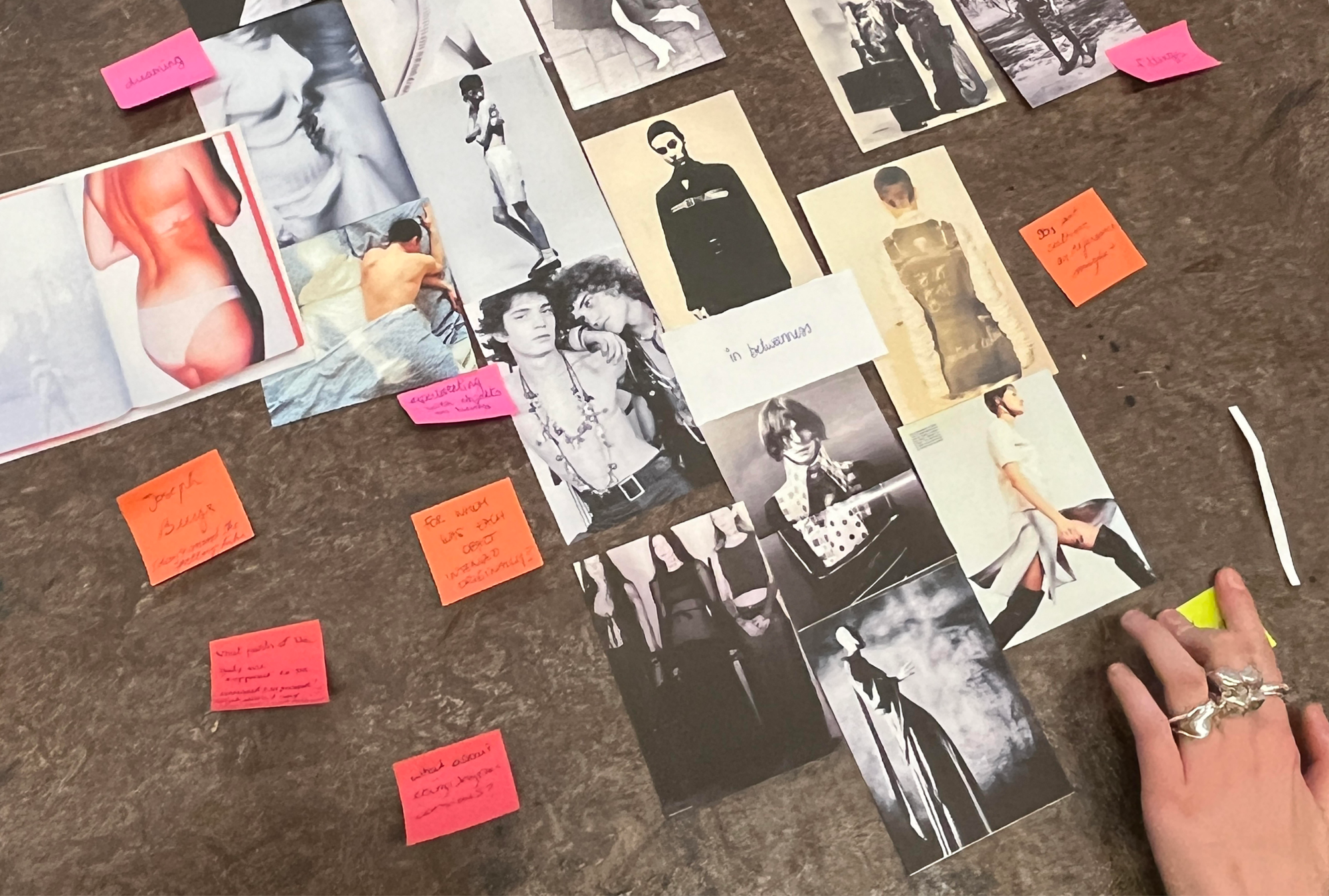
The text and video were produced as part of the Unwired Currents—Imagining Technologies Otherwise fellowship under the mentorship of Franca López Barbera and Nushin Yazdani.
The fellowship was part of the Unwired Currents—Imagining Technology Otherwise larger collaborative project between Dezentrum and Futuress, along with Dreaming Beyond AI, Franca López Barbera, and Matería Oscura. The program was possible thanks to a generous grant from the Swiss Arts Council Pro Helvetia.