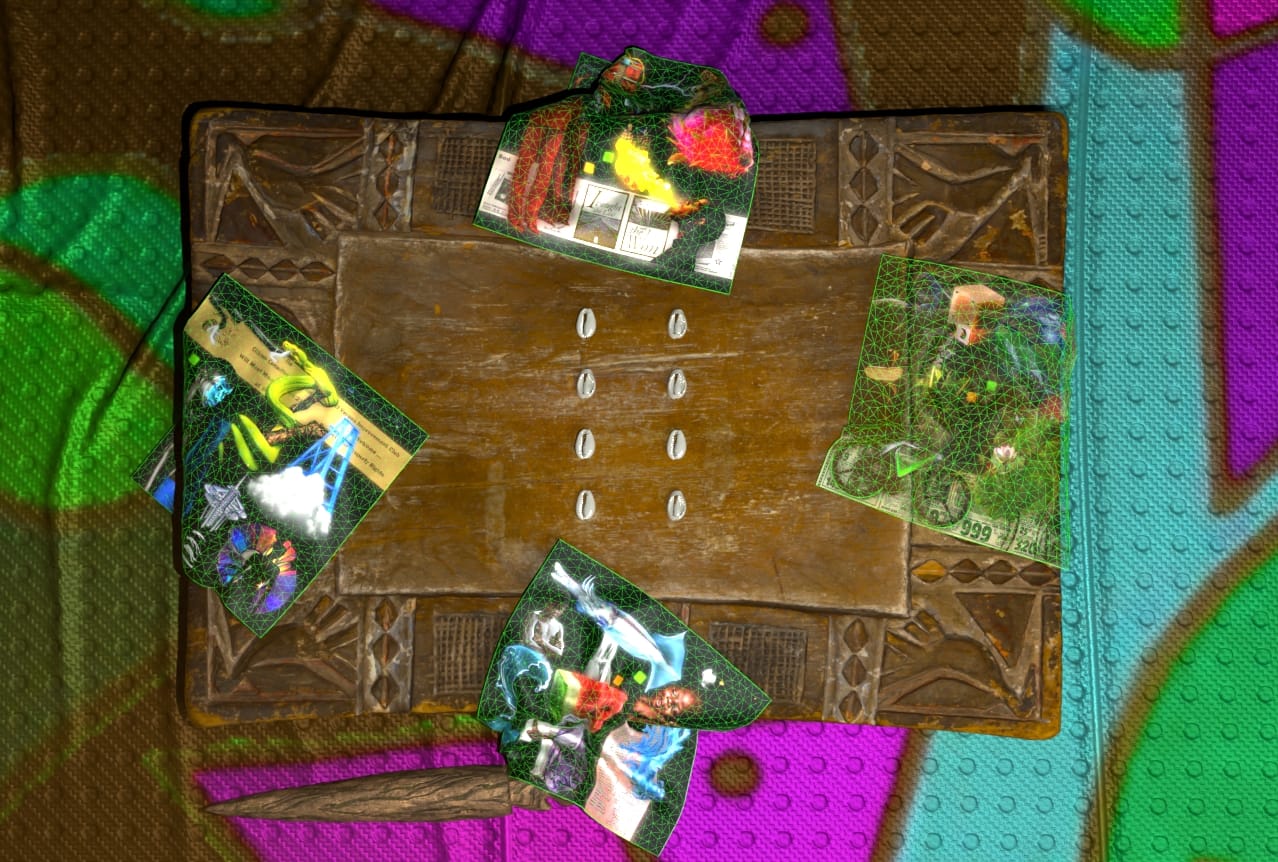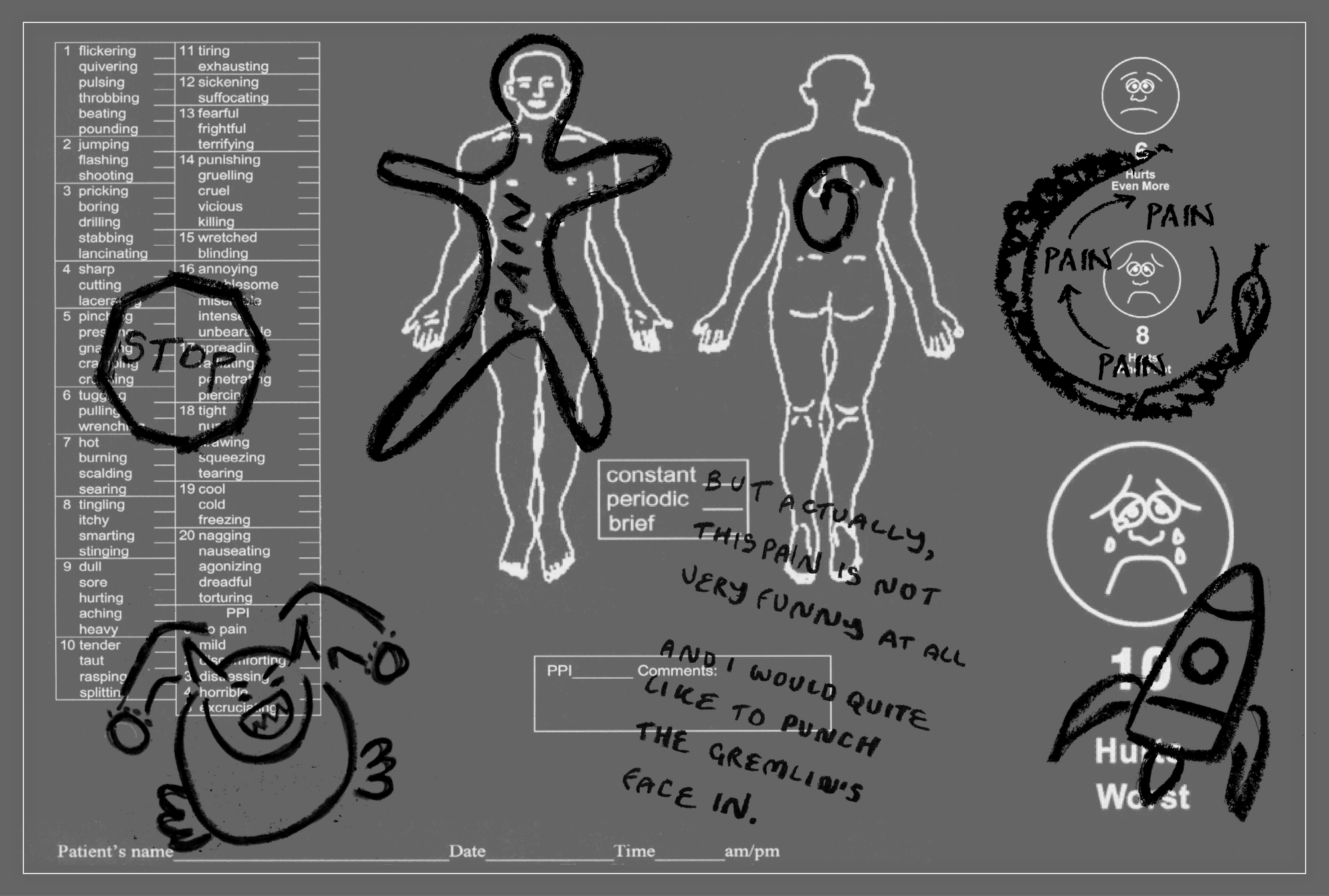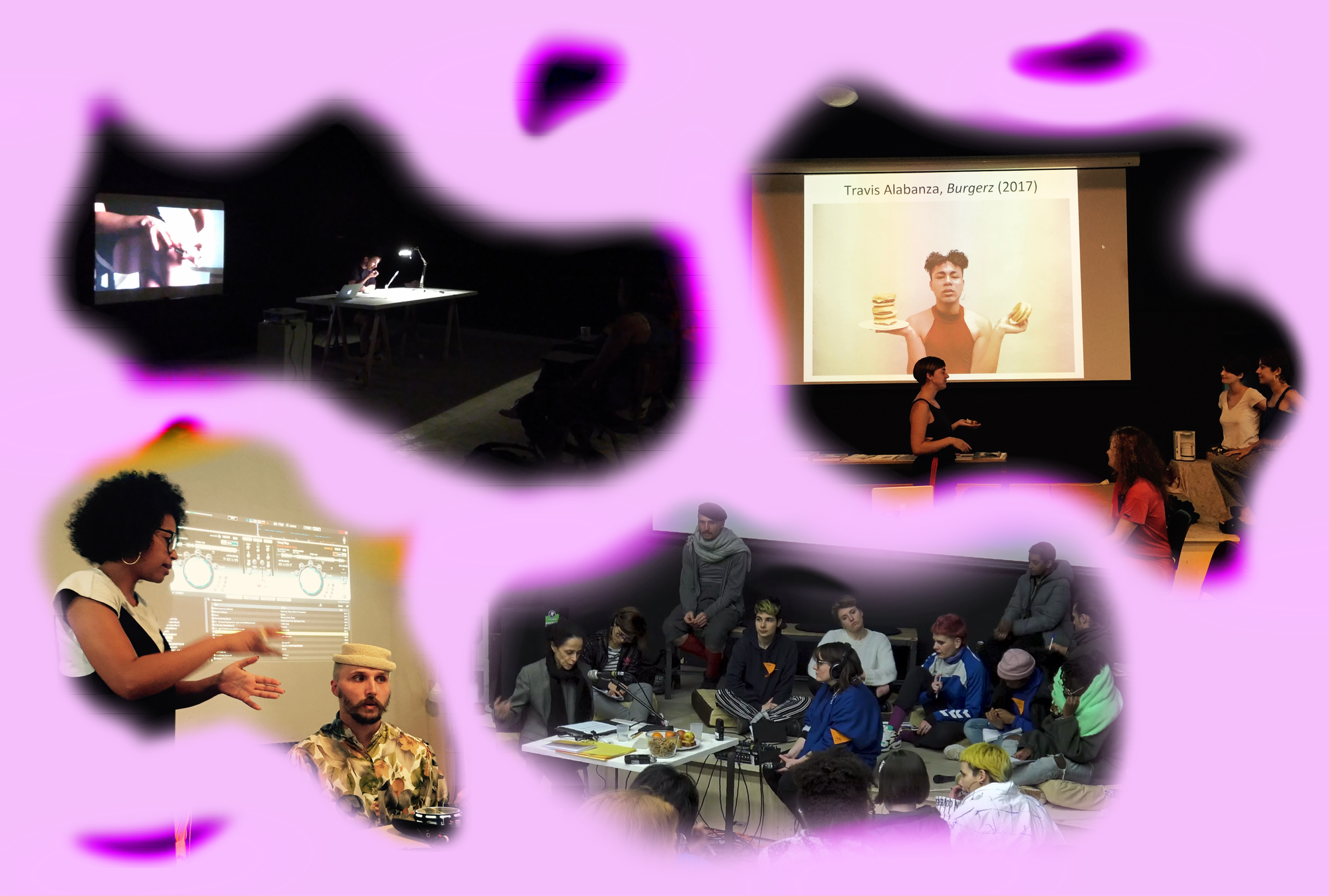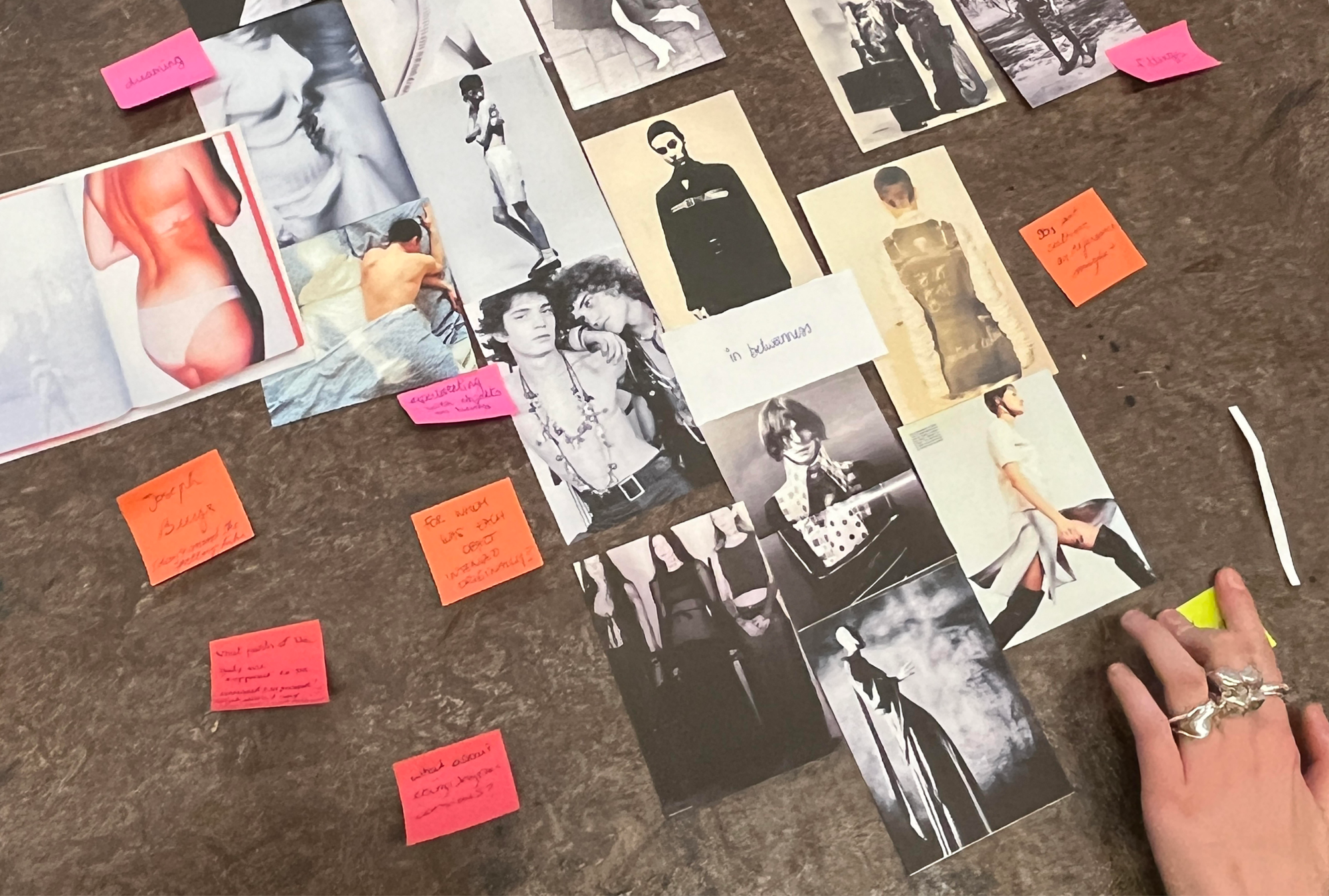
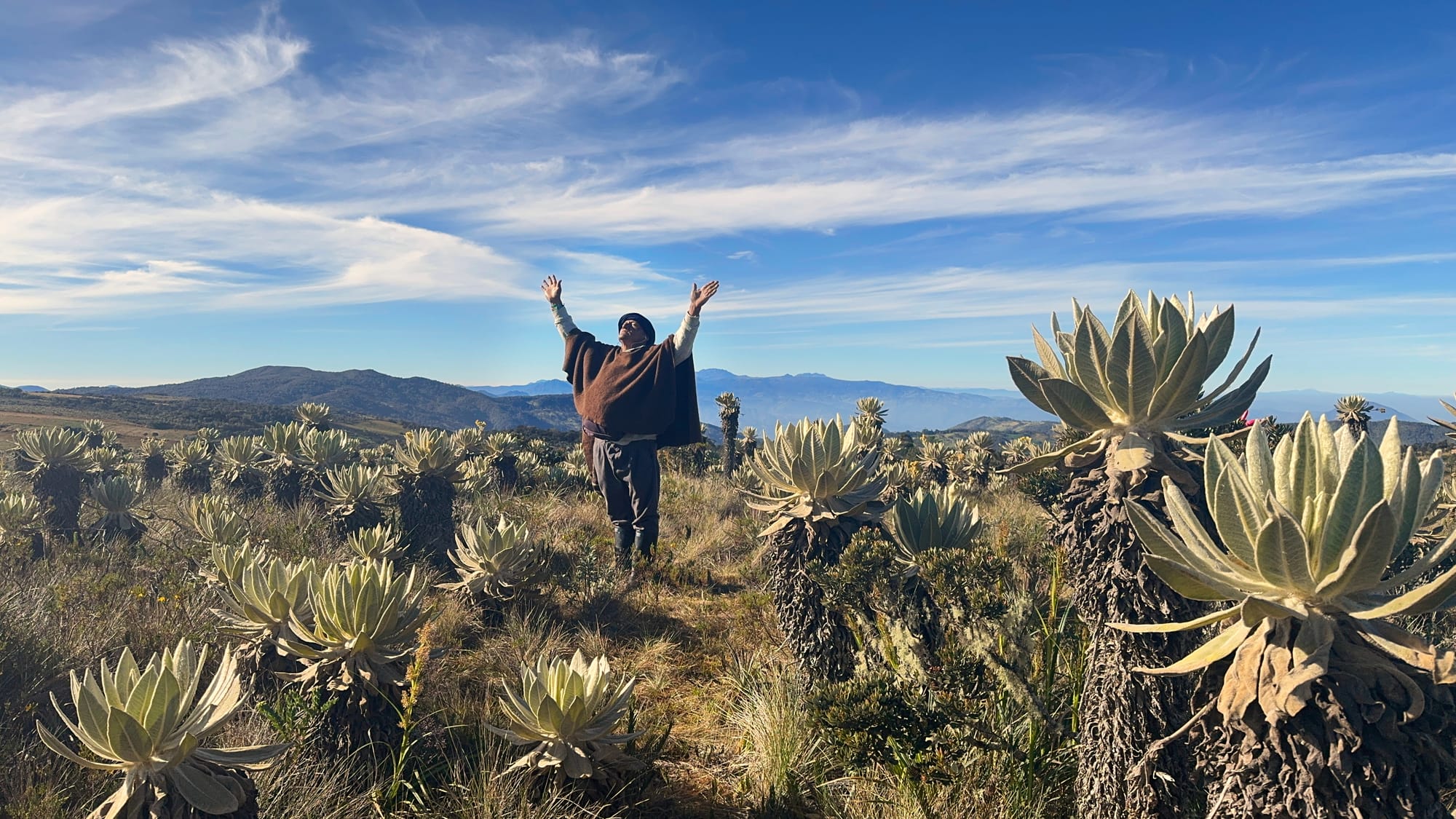
What is the Chakana? I asked. Mayor Ciro Imbachi, a Yanakona elder, did not answer with words. He stood and fashioned a support structure with his own body. He beckoned me forward, inviting me to lean against him. As I did, I felt an immediate sense of balance and a profound stability that was neither rigid nor fragile. It was a feeling of being held. That sensation, visceral and immediate, has prompted every question that followed. Away from the sterile logic of code and the abstractions of academia, this was knowledge transmitted through physical presence, a protocol for relation felt in the body. I also found myself drawn to the way he wove his thoughts; how, in his words, “nature and spirituality are always entangled.” That line, too, gave me a glimpse into the Chakana and why it was so important to him, though its full significance only began to take shape through time and conversation.
I encountered the Yanakona community in southern Colombia while participating in the School of the Pluriverse, an initiative to challenge Western paradigms and open space for other technological and cosmological imaginaries. Held in 2024, it was organized by the Colombian art collective NOMASMETAFORAS (no more metaphors) in collaboration with the Universidad Autónoma Indígena Intercultural (UAIIN) and the Regional Indigenous Council of Cauca (CRIC). My participation was also part of my ongoing research on the pluriversalization of technologies, which asks whether technologies can be designed in attunement to place, locality, and the relational reality of a living cosmos.
“Territorio is the living web of relations between community, ancestors, water, plants, animals, and cosmos.”
The Yanakona are one of many Indigenous peoples in the Cauca region, southwestern Colombia, whose horizon is autonomía, the right to define their own forms of life, knowledge, and relation to territorio outside the terms imposed by the state and the market. In Indigenous movements across Latin America, territorio carries far more than its English translations “land” or “territory” suggest. It is the living web of relations between community, ancestors, water, plants, animals, and cosmos, a relational field through which life is sustained and self-governance is exercised. That horizon is under constant threat by overlapping forms of dispossession, centuries of state violence targeting their cultural practices and governance structures, the forced recruitment of children by paramilitary, the assassination of community leaders, and illegal gold mining in their páramo (moorland) ecosystems.
Disillusioned with the extractivist logic that drives global centers of digital design and inspired to imagine together with Mayor Ciro, I began to ask: How might Yanakona cosmology open different ways of understanding digital technology? The digital design field celebrates connection: more users, more networks, more data points linked together. Within this paradigm, to be connected is to be linked, but linking does not require transformation. Relationality, by contrast, entails mutual constitution, as both parties are inevitably transformed through the encounter. We don’t need more connection, we need more relationality. This is the paradox at the heart of this article. How could we design systems that create this feeling of being held, rather than simply being connected?
A Mono-Technological World
From Silicon Valley to Shenzhen, the world’s tech giants champion innovation while leaving untouched the hard questions: who owns it, who profits from it, and what does it cost the planet? At its core, Silicon Valley’s cosmology is a techno-theological worldview built on computational universalism. This is the belief that all existence can be reduced to information processing and optimization. It is a fusion of technology, capital, and scientific rationality that worships disruption, sees scale as the only measure of value, and promises technological transcendence while treating the world as a source of extractable data. Most dangerously, this worldview presents itself as neutral and inevitable—“just technology”—while actively reshaping the world according to its particular vision.
What Western modernity calls technology is only one particular form of technics, the broad domain of technical activity. The philosopher Yuk Hui argues that technics is never separate from the world it belongs to. Every technical practice, from weaving to writing code, from agricultural ritual to algorithms, is bound to a particular cosmological and moral order, a binding he calls cosmotechnics. Modern technology is the form that disavows this binding, treating technique as a neutral instrument apart from nature and spirit, and presenting itself as universal. This severance is a wound in the history of technics. Every culture develops its own cosmotechnics, rooted in its particular understanding of the cosmos, and every technique shapes those who practice it in return, in a sort of becoming-with-technology. Every tool brings with it rituals, modes of perception, and ways of inhabiting the earth.
Western digital infrastructure is built through and for exclusion. As media theorist Alexander Galloway outlines in Protocol: How Control Exists After Decentralization, interconnecting technologies such as the internet are not the open, horizontal network they appear to be. Their power operates through technical protocols, which are the shared rules that determine how data is packaged, addressed, and delivered across networks. By setting the conditions of participation, protocols also discriminate, filter, and regulate, making some actions possible and others impossible or illegible. This is why tech hubs across the world tend to look and operate in similar ways; they are built on the same underlying logic that predefines what counts as information and what does not. Territorial protocols that require physical presence, such as reading the sky or a medicinal classification transmitted through touch, fall outside what digital protocols can process. As anthropologist Arturo Escobar argues in Pluriversal Horizons: Notes for an Onto-epistemic Reorientation of Technology, this produces a dominant way of being shaped by Western technology and global capital, what he calls a “monohumanist technosociality.” This monohumanism is enforced by concentrated power. A handful of monopolistic tech companies control the protocols and, in doing so, mediate our very mode of existence, prepackaging experiences of becoming-with-technology along a single trajectory that is profitable only to them.
Against this imposed universalism, Hui proposes a plurality of cosmotechnics, which he calls technodiversity. Just as biodiversity is a condition for ecological resilience, technodiversity is a condition for cultural and epistemic survival. The dominance of a single technological logic forecloses other possible worlds before they can be imagined. Reframing technology through alternative cosmologies is far from new. In Staying with the Trouble: Making Kin in the Chthulucene, techno-feminist thinker Donna Haraway asks, “What if Western evolutionary and ecological sciences had been developed from the start within Buddhist instead of Protestant ways of worlding?”
Yet there is an inherent tension in thinking about technology from other cosmologies, since the very category of technology as distinct from nature or spirit is a product of Western modernity. Terms like “Indigenous AI” or “African algorithms” risk imposing foreign frameworks onto practices that may not separate technique from ritual, tool from relationship, or practice from ceremony. Even well-intentioned efforts to include other ways of knowing can reproduce what feminist theorist Gayatri Chakravorty Spivak calls epistemic violence. This violence is not a failure to recognize other ways of knowing but their active erasure. Decolonial thinker Rolando Vázquez Melken argues that modernity affirms its universality through a double negation, excluding other ways of knowing and then erasing the very fact of that exclusion. Digital protocols make this exclusion ruthlessly efficient, deciding in advance what counts as information and discarding whatever cannot be reduced to data.
How, then, can one engage with another cosmology without perpetuating this violence? For me, this meant accepting that knowing would arrive slowly and often through the body rather than through intellectual analysis, while remaining attentive to the limits of my position as an outsider. Cosmovivencia is an Andean term that resists translation and names the embodied experience of living within, and as part of, a living cosmos. For the Yanakona, cosmovivencia is not about returning to the past but about relearning how to be in relation within a fragmented world. This relearning, too, brings its own tensions. There is the discomfort of partial understanding and the friction between worldviews that cannot be fully translated. It also demands attuning to certain rhythms, recognizing when to act and when to pause, not forcing processes, and accepting that understanding unfolds in cycles rather than along a straight path to mastery. This essay turns to the Chakana as a teacher of a different logic, one rooted in a cosmology of relationality.
The Chakana as Relational Cosmology
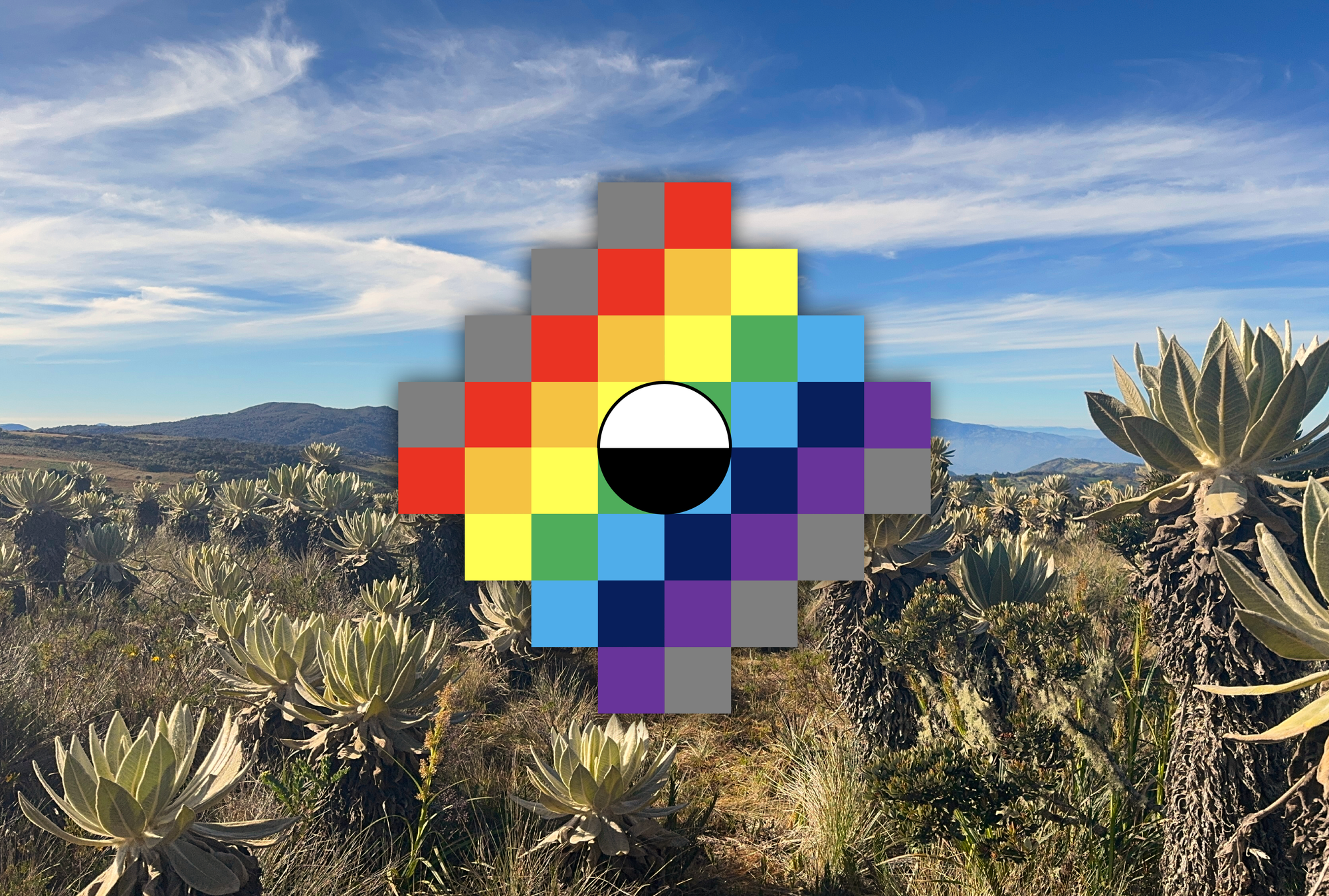
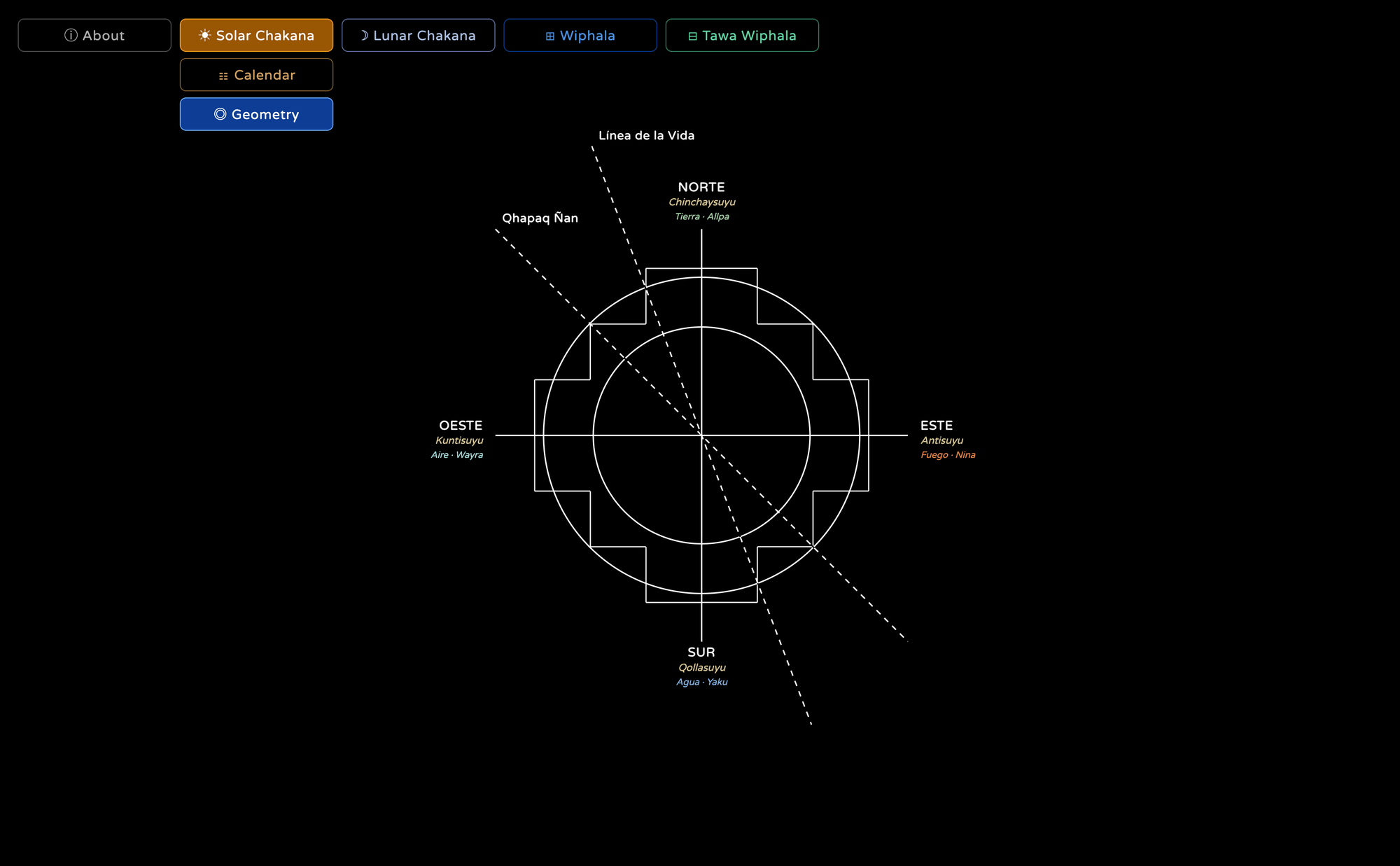
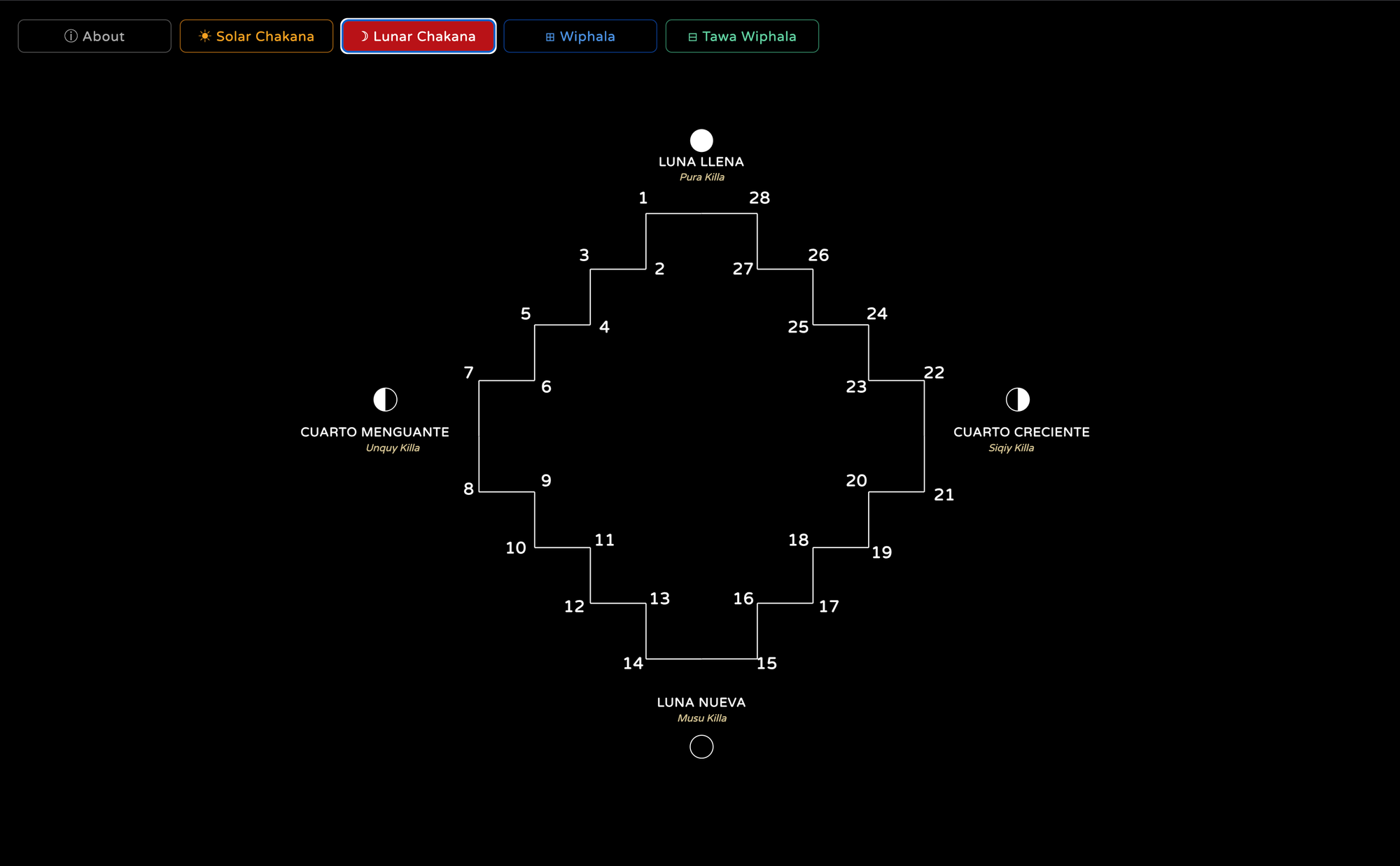
The Chakana is an important symbol in Andean cosmology, with origins reaching around 4000 years back, predating by millennia the Inca Empire (c. 1438–1533). Older than any single community or tradition, it has been carried and reinterpreted across many Andean peoples, each developing their own relationship to its form and meaning. Its name derives from the Quechua word chaka, meaning “bridge.” The Chakana is also the Southern Cross constellation, a formation of five stars visible in the southern sky. This constellation rotates on November 2 when it descends below the horizon, opening the door to the Uku Pacha (the underworld), and on May 2-5, when its diagonal becomes perfectly visible, opening the door to the Hanan Pacha (the upper world). As Mayor Ciro describes it, the Chakana is “the bridge between the Hanan Pacha, the Uku Pacha, and the Kay Pacha (the middle world, where we are).” In the Yanakona understanding specifically, the Chakana is never a closed form, as its four corners are left open so that Allpa (Earth), Yaku (Water), Waira (Wind), and Inti (Sun) can enter and move through it. The symbol does not contain; it receives. This cosmic order circulates; always moving between worlds, seasons, and bodies. Time here is a spiral where each return arrives somewhere recognizably familiar yet transformed. The pacha (space-time in Quechua) is thus represented as a spiral. Every agricultural cycle, every ritual, every celestial rotation is a traversal of this form, carrying forward what came before while arriving somewhere it has never quite been.
The Hanan Pacha is the realm above where the stars, moon, and sun reside. In the Yanakona understanding, the stars are ancestors, souls that have ascended and now watch over the living. Mayor Ciro acknowledges the Western scientific view of space: “the astronauts say they go to the Moon with their science,” while simultaneously holding the view that the stars are relational beings. The Uku Pacha, the world below, is the ground beneath our feet and a vibrant realm of ancestral spirits, subterranean energies, and the very source of life. Mayor Ciro speaks of it as an inhabited realm whose beings are still being discovered, and even offers multiple, coexisting theories on the afterlife. Some souls ascend to become stars, while others, as he puts it, “remain wandering, transforming into a being” in the Kay Pacha, this world. The Chakana insists on orientation in both directions, upward toward the ancestors in the stars and downward toward the source of water and life.
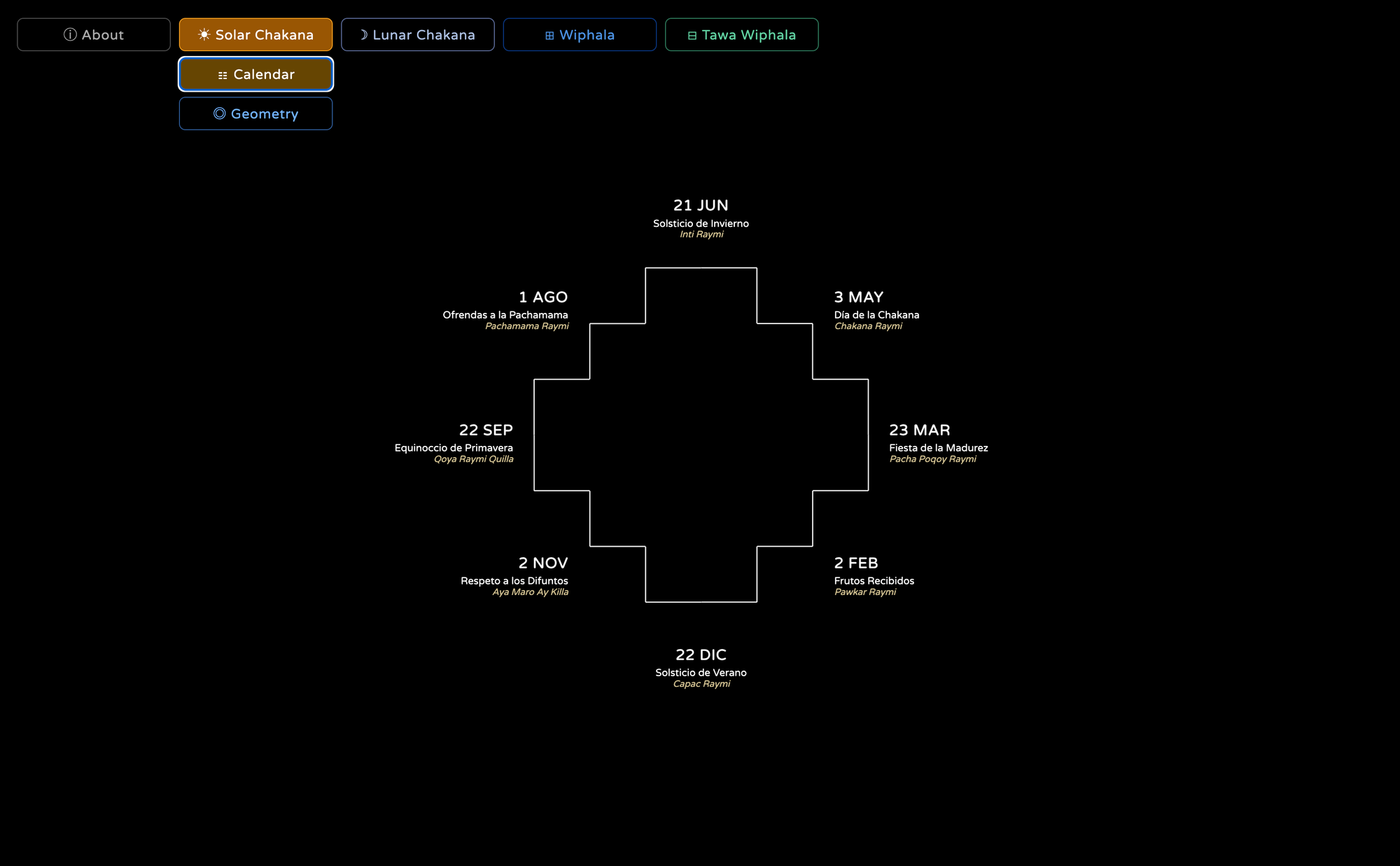
The vertical connection between worlds is anchored by a horizontal relationship with the immediate environment. The stepped corners of the Chakana represent the four cardinal directions and the elements that sustain life (Allpa, Yaku, Waira, and Inti). Thus, the “bridge” weaves the spiritual realms of the ancestors into the tangible presence of wind and soil. The Chakana also extends beyond the spatial to the temporal, functioning as a sophisticated calendrical technology. Mayor Ciro explains how the four key points mark the Andean festivals (Kulla Raymi, Kapak Raymi, Inti Raymi, and Pawkar Raymi), which synchronize agricultural practice with celestial cycles. Each festival corresponds to a crucial phase in the life of plants, from germination to fruition and the preparation of the earth for a new cycle. This same cosmological logic informs a system of traditional medicine: within the Chakana, plants are understood through their linkage to elemental axes (water, air, fire, and earth). As Mayor Ciro describes, this results in a classification of plants as “hot,” “cold,” or “medium,” a diagnostic tool for selecting specific plants to restore balance within the body. The Chakana operates as a mediator, weaving astronomy, agriculture, and medicine into a single, cohesive system; it is the structural expression of a relational whole in which nothing is more or less important than anything else.
Multiple truths can coexist without it meaning contradiction or requiring resolution— astronauts travel to the Moon with their science, and the stars are the ancestors watching over the living. This is an acknowledgement that not everything can or will ever be fully known. It stands in contrast to the technoscientific drive to measure, quantify, and ultimately control every dimension of existence, whether drilling for oil in the earth’s depths, launching satellites into orbit, mining data from our behaviors, or extracting lithium from salt flats. The Chakana operates differently. It sustains bridges between worlds without demanding their full disclosure or documentation. It generates protocols for living with what remains unknown rather than technologies for eliminating uncertainty.
Chakana protocols are relational, grounded in reciprocity, and guided by intention. Yanakona ceremonies, for example, emerge from the Chakana itself. As the constellation moves across the sky, it indicates the temporal space for action, when to plant, when to harvest, when to rest, and when to make offerings. In Andean thought, space and time form an inseparable unity that is cyclical rather than linear, returning rather than progressing. Mayor Ciro describes specific practices. Before entering a territory, one must seek permission from the territory itself. This entails offerings of coca leaves, spoken greetings, and moments of silence sitting to listen for the land’s response. Reciprocity here is lived. As the Andean saying goes: “If you sow tears you harvest hatred; if you sow smiles you harvest happiness. What you offer to the land, the land returns.” Chakana protocols recognize certain sacred sites as potent nodes where the three worlds intersect. Some of these sacred sites require fasting beforehand; others are accessible only at particular times of day or year, when the alignment between worlds allows safe passage. Some sacred sites reject visitors entirely—sudden storms rise, paths become impassable, a sense of unwelcome pervades—while others open to those who approach correctly. Mayor Ciro calls them “powerful sites, sites to be careful with, which one cannot simply enter.” Through these practices, Yanakona people walk a path traced by the stars, becoming part of the cosmos. The Chakana functions as both guide and guardian, creating an architecture of approach that enables safe passage between realms while maintaining necessary boundaries.
“It is a collective practice of reading the living world through the behavior of animals, the song of birds, the color of the sky before rain—a science that was nearly lost because it was not written down, which survives today through the active effort of communities to recover and transmit it.”
To Touch the Territory
Walking through the territory with Mayor Ciro, noticing the grass underfoot and the subtle changes in the air, I began to learn what he calls la ciencia de tocar un territorio (the science of touching a territory). This is an inward science, a way of knowing through direct bodily engagement with territory. Practices like chewing coca leaves or participating in Yagé ceremonies (a sacred plant ceremony practiced in many Indigenous communities of southern Colombia) not only attune the body to the land but also create intimate contact. Knowledge arrives as transformation experienced in the flesh, through the entanglement of human, plant, and territory. In this cosmovivencia, the body generates knowledge, mapping the cosmos through its own structure. As Mayor Ciro explains, “The head is the sun, the east, the feet are the west, the left arm is the water, the right arm is the air.” Through direct, material engagement, the body registers territorial shifts through joint pain or senses a change in temperature that signals spiritual presence. This is one register of knowing. The other, what Mayor Ciro calls la ciencia del indio (Indigenous science), is an outward-facing science, a science of attunement. It is a collective practice of reading the living world through the behavior of animals, the song of birds, the color of the sky before rain—a science that was nearly lost because it was not written down, which survives today through the active effort of communities to recover and transmit it.
Thinking informatics in terms of the Chakana means acknowledging that knowledge is inseparable from the body’s ongoing, material engagement with the world, from touching, listening, breathing within a territory and being shaped by it in return. Knowledge is a relation that cannot survive the knower being pulled from the territory that sustains them. Yet the digital infrastructure we depend on is built around precisely this pulling away; its mined minerals, burning server farms, and cables cutting across ocean floors must remain out of sight for the promise of placeless knowing to hold. When I asked Mayor Ciro what he thought of the internet, he paused before saying it was “important because it shows the good and the bad.” I could not help but hear in that pause something unresolved, an acknowledgement of utility that sat uneasily alongside everything he had just taught me about what it means to truly know a place. The internet shows, but it does not touch. It tries to reach everywhere but is rooted nowhere. This was, after all, how it was designed. A decentralized network with no center, no single point of failure, built to survive by belonging to no particular place. But a network designed without a center is not a network without ground. It still depends on land, on minerals, on the earth it was built to forget.
“In Yanakona protocols, the territory is a living entity, co-created through generations of reciprocal practice, accumulated offerings, and sustained attention.”
What emerges here is design through relationality rather than connection. In their enactment, Chakana protocols are transformational. Through fasting and listening, for instance, both the person and the sacred site come into mutual constitution, each shaping and being shaped by the other anew. Relationality recognizes that entities come into being through their relationships. In Yanakona protocols, the territory is a living entity, co-created through generations of reciprocal practice, accumulated offerings, and sustained attention. It remembers, responds, changes. Sacred sites emerge through generations of proper approach, accumulated offerings, and sustained attention. Design becomes less about connecting pre-existing nodes and more about fostering conditions for mutual becoming.
At the same time, the living principles represented by the Chakana recast the very notion of computation. Referring to the attunement that la ciencia del indio (Indigenous science) suggests/evokes/calls for, Mayor Ciro explains, “Now we know more or less how to recognize the signals: the song of the birds, the meaning of the trees before the rain or the summer, the croaking of the frogs.” However, for Chakana, knowing happens through resonance. The body does not process the environment as external data but immerses itself into a living language, reading the subtle syntax of the biosphere through its senses. It is a dialogue in which the practitioner vibrates with the rhythms of the wind or the behavior of animals to understand the state of the world, with living and non-living entities as participants in a distributed cognitive system. It is a form of ambient computing but without rare earth extraction, a sort of pattern recognition but without server farms. Shifting the paradigm from Artificial Intelligence to what might be called cosmological intelligence, the goal moves from building an artificial model of the world to attuning oneself to the intelligence that is already present in the world.
Towards Chakana informatics
How, then, could a Chakana informatics be possible? Let’s return to the central insight of this essay: we don’t need more connection, we need more relationality. Connection, in the Silicon Valley model, is transactional and frictionless; it links discrete entities without fundamentally changing them. Relationality, as taught by the Chakana, is transformational. Both people and the territory constitute each other through the encounter, one founded on reciprocity and intention. This practice also calls forth a temporal orientation that does not force processes and that grounds knowledge in the body attuned to the intelligence already present in the world. For the Chakana, the most fundamental relation is with the territory as a living entity. This relationship acts as the ethical compass for all others. A Chakana informatics would trace the knowledge and intelligence of digital practices back to the territory that produces them.
“The Chakana’s order is a cycle that returns and renews. You tend what you belong to, and it sustains you in reciprocity.”
A Chakana informatics would also ask whether a technology enhances knowledge or merely augments it. Augmentation adds a capability from the outside, assuming the knower remains unchanged and can simply switch a tool off and on. Enhancement, by contrast, transforms the knower. After practicing la ciencia de tocar un territorio, you are no longer the same person. The body becomes differently attuned to the territory, and the attunement moves both ways. The territory is not understood as a source of information, but it becomes an active participant in the making of knowledge. This is knowledge that cannot be switched off. It lives in the body, not in a device, and in return, you come to care for the knowledge and to protect the territory that produced it. This distinction matters because informatics is the science of how information is organized and transmitted, and every informatics carries a particular order within it. That order, however, can be designed otherwise. The Chakana’s order is a cycle that returns and renews. You tend what you belong to, and it sustains you in reciprocity. What would it mean to think of a Chakana informatics, where knowledge is ordered as a cycle of mutual becoming, and the territory is held inside the very logic that produces knowledge rather than being mined to produce it?
While the materiality of digital technologies—the minerals, water, energy—is becoming increasingly visible, the larger challenge is how to find forms of balance within these entangled conditions. Pluriversalizing technology asks how the territory and its cosmologies could become part of how we design. The Chakana offers a way of seeing across scales, moving through bodies and territories. It bridges between these scales without fully dividing them. Such division is what makes extraction of the minerals, of attention, of data possible. A Chakana informatics would register knowing across scales through resonance instead, attending to what the body senses in ceremony, what the territory says through birds and weather, what communities hold as ecological memory, and what the ancestors reflect back to the living. And so, whenever I seek balance, I lean back to the Chakana and return to my walks with Mayor Ciro and what the páramo taught me when I stayed long enough to listen. A Chakana informatics would be this returning made technical—a system that gives back what it is given, in return.
Juan Fortun (he/him) is a Colombian transdisciplinary designer and researcher based in Switzerland. His practice centers on digital commoning, integrating critical media theory and pluriversal design philosophies to explore technological interdependencies and socio-technical justice. His work materializes through design artifacts that serve as collective thinking tools, interactive installations, critical technology workshops, and experimental publishing practices. He employs Do-It-Together (DIT) and Do-It-With-Others (DIWO) methodologies to develop action-based collective research. He holds a Ph.D. from École Polytechnique Fédérale de Lausanne and HEAD Geneva, Switzerland, with a thesis titled “Designing for Decentralization: Ways of Connecting.”
The text and website were produced as part of the Unwired Currents—Imagining Technologies Otherwise fellowship under the mentorship of Franca López Barbera and Nushin Yazdani.
The fellowship was part of the Unwired Currents—Imagining Technology Otherwise larger collaborative project between Dezentrum and Futuress, along with Dreaming Beyond AI, Franca López Barbera, and Matería Oscura. The program was possible thanks to a generous grant from the Swiss Arts Council Pro Helvetia.